


Garbage Disposal Maintenance Guide
Proper garbage disposal maintenance is simple: use cold water, feed small amounts of food, av and starchy waste, and clean the splash guard regularly. Following these habits prevents jams, s and odors while extending the life of the disposal.
Most garbage disposal problems I see in Orange County homes are preventable. Odor, clogg premature breakdown almost always start with small habit issues—not defective equipment. In most a few simple maintenance habits eliminate the problem entirely.
I specialize exclusively in garbage disposals across Orange County, California, including Irvine, Ne Beach, Huntington Beach, Mission Viejo, Rancho Santa Margarita, and San Clemente.
If you’re already dealing with symptoms like humming, slow draining, leaking, or a garbage dis smells bad, start with the Garbage Disposal Troubleshooting Guide [Internal Link] before continuing below.
Table of Contents
Use the quick navigation links below to jump to the section that answers your specific garb maintenance question. This helps you quickly identify common causes of jams, odors, slow dra premature disposal failure.
- Quick Overview
- What Can Go Down a Garbage Disposal
- What Not to Put in Garbage Disposal
- Holiday Cooking & Garbage Disposal Overload Prevention
- Common Garbage Disposal Maintenance Myths
- Weekly Maintenance Routine
- Hard Water & Mineral Buildup
- Why Garbage Disposals Smell Bad
- Garbage Disposal Lifespan Timeline
- When Maintenance Isn’t Enough
- Weekly Maintenance Checklist
- FAQs
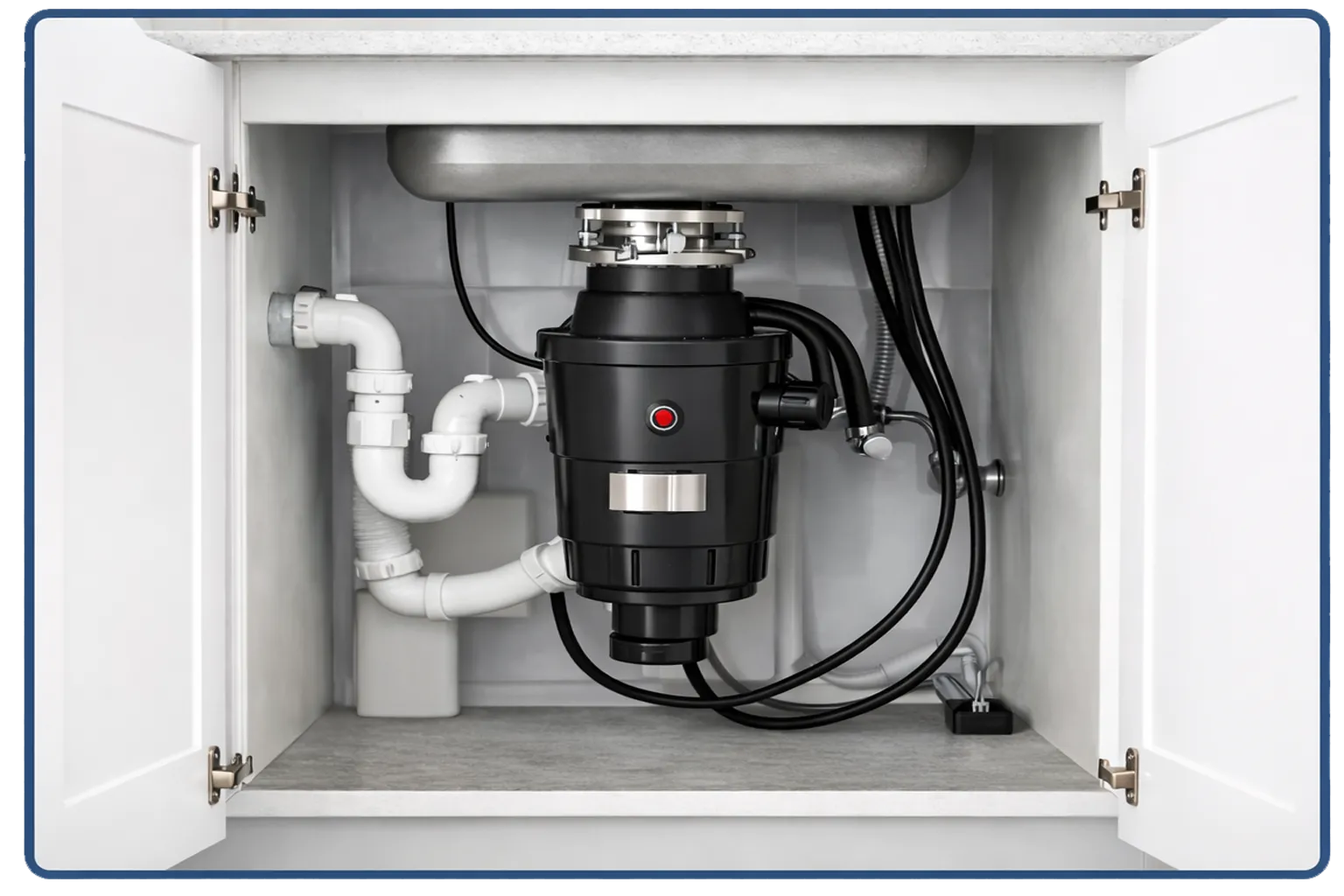
A garbage disposal is a kitchen appliance installed under the sink that grinds small food scr particles that can safely pass through household plumbing.
Garbage disposal maintenance means regularly flushing the system with cold water, limiting what g into the unit, and cleaning residue buildup under the splash guard and inside the grind chamber.
A garbage disposal clogusually occurs when grease, starch-heavy foods, or fibrous materials accumula in the disposal or drain line and restrict normal water flow.
Quick Overview
Most garbage disposal failures are not mechanical—they are usage and maintenance issues. The proper maintenance is to keep residue moving through the system before buildup begins. If the already acting up, start with theGarbage Disposal Troubleshooting Guide[Internal Link] before attempting deeper fixes.
Effective maintenance is simple: run cold water, feed small amounts, avoid grease and starch bu keep the splash guard clean.
If the unit is older (often 8+ years) or showing repeat symptoms—frequent jams, persistent breaker trips—maintenance alone will not solve it. At that stage, replacement is often the long‑term move.
Garbage Disposal Maintenance Topics
Garbage disposal maintenance involves several small habits that prevent clogs, odors, and early a failure. Many homeowners run into problems simply because they were never taught the sma habits that keep disposals working properly.
The articles below answer the most common maintenance questions and explain what actually inside the disposal and drain system. Together they create a complete garbage disposal maintenance knowledge hub that supports this guide.
Maintenance Topic Library
Cold vs Hot Water in a Garbage Disposal
Learn why cold water prevents grease buildup and improves disposal grinding performance.
What Foods Should Never Go in a Garbage Disposal
A detailed guide explaining foods that cause clogs, jams, and plumbing problems.
How to Clean a Garbage Disposal the Right Way
Proper cleaning habits that prevent odor and residue buildup.
Garbage Disposal Maintenance Checklist
A simple weekly and monthly maintenance routine homeowners can follow.
Can You Put Coffee Grounds in a Garbage Disposal?
Explains the coffee grounds myth and why grounds accumulate in drain pipes.
Can You Put Egg Shells in a Garbage Disposal?
Breaks down the egg shell debate and how shell membranes affect plumbing.
Why Garbage Disposals Smell Bad and How to Fix It
Explains odor sources including bacteria buildup and trapped food residue.
Why Grease Is the #1 Cause of Kitchen Drain Clogs
Details how fats, oils, and grease damage plumbing systems.
What Causes Garbage Disposal Odors Even After Cleaning?
Explains hidden odor sources deeper in the disposal or drain system.

These articles all link back to this pillar page and connect to troubleshooting and serv strengthening the overall internal SEO structure of the website.
What Can Go Down a Garbage Disposal (Small Amounts)
“Can go down” means small amounts with cold water running and gradual feeding—not dumping plate at once.
“Can go down” means small amounts with cold water running and gradual feeding—not dumping plate at once.
Safe examples (in small amounts):
- Soft fruit and vegetable scraps
- Small leftover food pieces
- Soft-cooked vegetables
- Small citrus peels (for light freshening)
- Tiny amounts of soft meat scraps
Even safe items should be fed slowly with steady cold water flow. The disposal should grind continuously—not process large batches at once.
Quick Reference – Safe vs. Unsafe
Generally Safe (Small Amounts Only)
- Soft scraps
- Small leftovers
- Soft vegetables
- Small citrus peels
Not Safe
- Grease, oil, fat
- Fibrous foods (celery, corn husks, onion skins)
- Starches (pasta, rice, potatoes)
- Coffee grounds
- Bones and hard pits
When in doubt, scrape food into the trash first and use the disposal as a finishing tool—n waste system.
What Not to Put in Garbage Disposal
Grease is one of the most common causes of kitchen drain problems. For a deeper explanation happens inside the pipes, see Why Grease Is the #1 Cause of Kitchen Drain Clogs?
If you’re searching what not to put in garbage disposal, these are the most common causes o and early failure:
- Grease, oil, and fat
- Fibrous foods (celery, onion skins, corn husks)
- Starchy foods (pasta, rice, potatoes)
- Coffee grounds
- Bones, pits, and hard objects
Holiday Cooking & Garbage Disposal Overload Prevention
Holiday meals (especially Thanksgiving through New Year’s) are when I see the most sudden problems. It’s rarely a single event—it’s overload: more cooking, heavier food scraps, and more o things disposals and drain lines hate.
The biggest holiday culprits are grease/fat, starch-heavy foods (potatoes, rice, pasta), and fibrous skins. These don’t grind into a clean liquid—they coat parts, thicken in the trap and drain line cycle of slow draining and odor.
The Holiday Rule
If it wouldn’t rinse clean off a plate with cold water, don’t send it through the disposal.
Holiday “Do This Instead” Checklist
- Scrape plates into the trash first; use the disposal for small leftovers only.
- Keep a small “scrap bowl” by the sink and empty it to the trash periodically.
- Always run cold water before, during, and 10–15 seconds after grinding.
- Feed small amounts at a time—never dump a full plate’s worth in one go.
- Keep grease/oil out of the drain entirely (wipe pans with a paper towel and trash it).
- Avoid: potato peels/mash, stuffing, rice/pasta, celery/onion skins, coffee grounds, bones/pits.
If You Notice Slowing or Odor During the Holidays
Stop feeding scraps and switch to a cold-water rinse only for the rest of the day. Then guard and do a simple flush routine (cold water + short run) to move residue through.
If you’re already dealing with slow draining or a backup, jump to the Garbage Disposal Trou Guide [Internal Link] and the “Clogged or Draining Slowly” page [Internal Link] so you don’t make it worse.
Common Garbage Disposal Maintenance Myths
Many disposal problems start with well‑intentioned but incorrect advice repeated online.
| Myth | Reality |
|---|---|
| Hot water cleans | Hot water melts grease temporarily, allowing it to solidify further down the drain. |
| Lemon cleans the disposal. | Citrus freshens odor but does not remove buildup. |
| Baking soda and vinegar | Foaming may deodorize lightly but does not remove hardened grease or biofilm. |
| If it’s soft, it’s safe. | Many soft foods (like pasta and rice) expand and create t buildup. |
The Simple Weekly Maintenance Routine
Homeowners often ask how to clean a garbage disposal. The goal is simple: remove residue odor before buildup begins.

Cold Water Flush Habit
Run cold water during use and for 10–15 seconds after grinding to help move debris fully the drain line.
Why Cold Water Is Recommended
For a deeper explanation of the science behind water temperature and drain buildup, see the arCold vs Hot Water in a Garbage Disposal: What Actually Happens [Maintenance Article].
Use cold water when running a garbage disposal because it keeps grease and fats solid so chopped and flushed through the drain. Hot water melts grease temporarily, allowing it to tra down the pipe where it cools and hardens, often causing buildup and slow drains.
Simple rule: use cold water while grinding and for 10–15 seconds after. You can switch water afterward for normal sink rinsing.
Splash Guard Cleaning
The rubber splash guard is the most common source of garbage disposal odor because foo collects under the rubber flaps. Turn the power off and clean beneath the flaps periodically buildup.
Buildup Knockdown
Some homeowners use ice to help remove residue from the grind chamber. Learn more inHow to Clean a Garbage Disposal the Right Way [Maintenance Article].
Ice helps dislodge residue from the grind chamber walls. Small citrus peels may freshen tempo they do not replace proper cleaning.
Hard Water & Mineral Buildup in Orange County
In parts of Orange County, moderate to hard water contributes to gradual mineral buildup inside and appliances—including garbage disposals. This rarely causes sudden failure, but it does affect lo efficiency.
Over time, calcium and mineral deposits can form along the inner housing and around compone the disposal. This buildup can trap food particles more easily, contribute to odor retention, and smoothly debris moves through the system.
Hard water also accelerates residue accumulation when combined with grease. Minerals bond with create stubborn buildup inside the P-trap and horizontal drain line—leading to slow draining and odor complaints.
The solution is not special chemicals—it’s consistent good habits: cold water use, keeping grease drain, and regular splash guard cleaning. In older homes with long horizontal drain runs, pr maintenance matters even more.
Garbage Disposal Installation FAQs
Installation may look simple, but improper mounting and
sealing often cause leaks. Professional installation reduces repeat problems.
You need a safe electrical connection. If an outlet
isn’t present, electrical work may be required.
It depends on replacement vs new install and
whether electrical modifications are required
Most units last 8–12 years depending on
usage and quality.